Insights
Are you curious about what we do? We offer you insights into our world and that of our clients, provide practical tips and bring you news and topics relating to leadership and change.
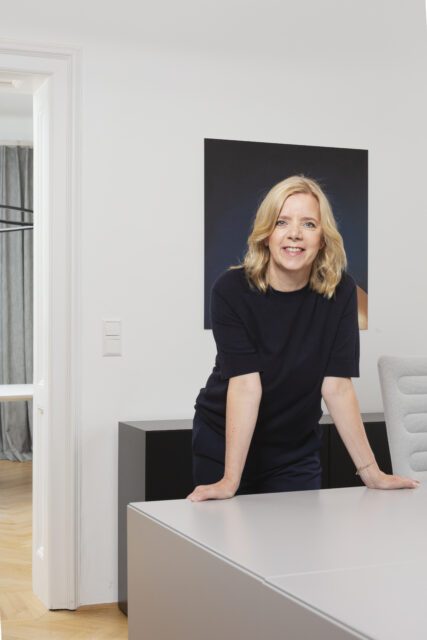
KOKO Aligns its Administration for the Future

From Fractures to Bridges

Dual Leadership

Think. Pause. Amplify.
Purpose
Your purpose gives direction. It guides decisions and actions and gives meaning to experiences.
Values
There is often a gap between what we call values and what we actually live by. Congruence arises when values and actions move closer together again.
Achievements
Successes make progress visible. They nurture self-confidence, energy and a sense of effectiveness.
Relationships
Our relationships, both personal and professional, influence our well-being and opportunities more than we often realise.
Learning
Nature knows no middle ground. Everything moves towards growth or retreat. Development does not just happen – we decide to pursue it.

COX Cooking
creamy lentil soup
The 7 pillars of resilience
Optimism
does not mean, ‘Everything is fine.’ It means, ‘I choose what to focus on.’
Acceptance
does not mean giving up. It means: I am going to stop fighting reality.
Solution orientation
does not mean taking action for the sake of it. It means seeing the next possible step.
Self-efficacy
does not arise from motivation. It arises from small successes of one’s own.
Networking
is not a weakness. It is a human resource.
Being future-oriented
does not mean ‘planning’. It means regaining the ability to act.
Taking responsibility
does not mean looking for someone to blame. It means recognising my part in it and thereby regaining control.

COX Open House
Our remedies against the winter blues
Magdalena
“In winter, I consciously focus on nutrition: eating colorful fruits and vegetables every day helps me stay healthy and strong through the cold months. Or as I like to say: ‘An apple a day keeps the winter blues away.’ That way, my mood stays vibrant and colorful, too.”
Viktoria
“My recipe against winter fatigue: going for a run after work, doing yoga weekly, and consciously planning time for family and friends. This helps keep my daily life in balance despite many to-dos.”
Helga
“Movement + connection = pure energy for me! Once a week I do strength training with my workout sisters – and we talk about everything that’s important or completely unimportant. This mix of physical activity and shared laughter is my absolute energy booster.”
Sebastian
“For me, exercise is the most important balance — especially in autumn and winter. Four to five workouts per week, whether running or strength training, keep me physically fit and help me clear my mind. In addition, regular conversations with family and friends give me extra energy.”
Flora
“My daily routine is doing yoga in the morning combined with listening to positive affirmations — it gives me a mindful and calm start to the day. In addition, every Sunday I write myself a weekly plan with all to-dos and appointments so I can start the new week with clarity and structure.”
Viktor Frankl
“Between stimulus and response there is a space. In that space lies our power to choose our response. In our response lies our growth and our freedom.”

What is Somatic Coaching?
Definition
Somatic coaching is a process-oriented form of support.
It uses physical awareness, movement and mindfulness to promote personal development, change and self-efficacy.
Key Features
A central component is strengthening body awareness, with embodiment playing a key role. This involves not only understanding emotions and thoughts, but also experiencing them physically, thereby making them changeable.
In this way, inner resources are activated and insights are anchored in the body in a lasting way.
Fields of Application
Whether in personal development, resilience training or leadership, change, stress or inner growth, somatic coaching is effective wherever consciousness and movement come together.
4-K Resilience Tool
Clarity
What exactly is the challenge?
Control
What specifically is within my sphere of influence (directly or indirectly)?
Competence
Which of my strengths and experiences will help me here?
Contact
Who or what can support me in my specific situation?